What makes Scottsdale feel truly livable year-round if you own a luxury home? It is not just the sunshine, though the city enjoys 314 sunny days and just 7.66 inches of annual rainfall. It is how each season changes the way you use your property, from patio-centered winter gatherings to indoor retreat living during peak summer heat. If you are buying, selling, or evaluating a high-end home in Scottsdale, understanding that rhythm can help you make better real estate decisions. Let’s dive in.
Scottsdale Living Follows the Seasons
Scottsdale has a distinct seasonal pattern, even if it does not look like a four-season market in the traditional sense. According to NOAA climate normals for Scottsdale Municipal Airport, average temperatures range from 66.5°F/43.4°F in January to 104.1°F/82.6°F in July.
That spread shapes daily life in a very practical way. Late fall through spring is generally the outdoor season, while midsummer shifts activity toward shaded spaces, pools, and cooled interiors. Scottsdale’s own heat-planning materials note that extreme heat can discourage outdoor activity and raise utility costs, which makes home design and comfort features especially relevant in this market.
Winter Brings Scottsdale Outdoors
For many homeowners, winter is when Scottsdale feels most social. January temperatures average in the mid-60s during the day, which makes patios, courtyards, and outdoor dining areas far more usable than they are in midsummer.
This is also when the city’s event calendar becomes a meaningful part of daily life. Barrett-Jackson’s Scottsdale auction week returns each January at WestWorld, and the city describes WestWorld of Scottsdale as a nationally recognized equestrian and special-events venue.
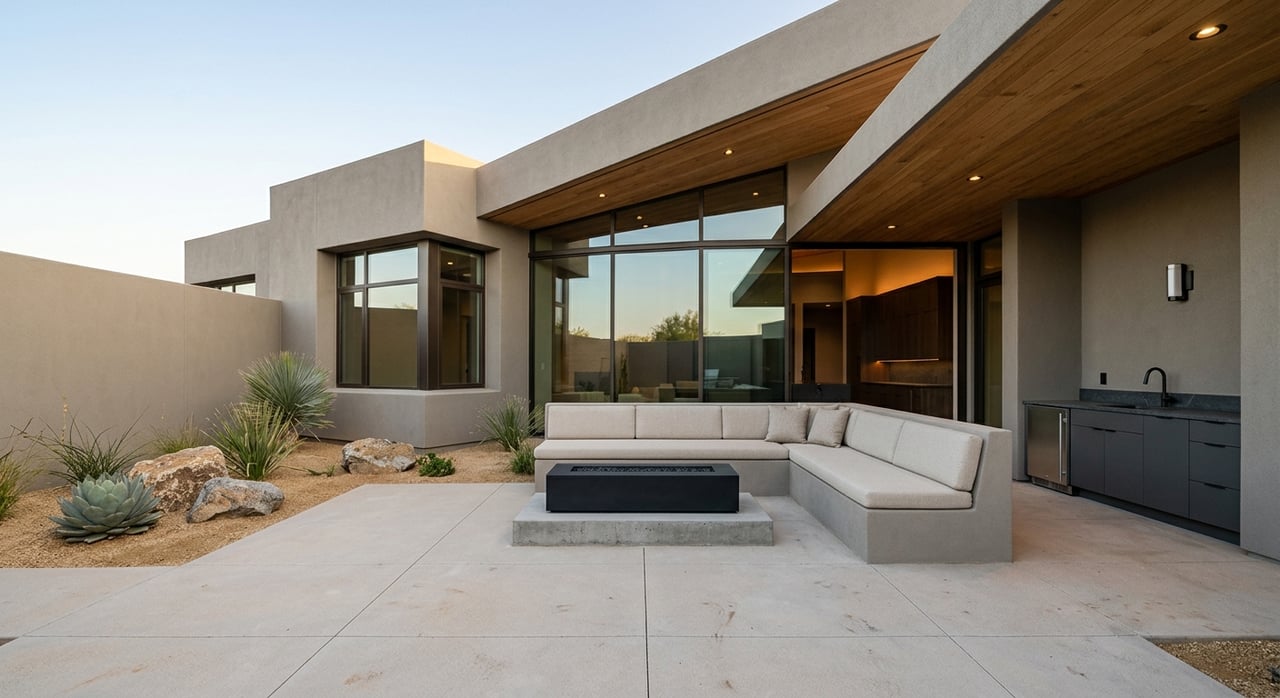
For homeowners, that seasonal energy often translates into a stronger focus on entertaining. Covered outdoor seating, easy guest flow, and proximity to Scottsdale’s event hubs can feel especially valuable during the cooler months.
Spring Is the Peak Lifestyle Window
If winter opens the social season, spring may be Scottsdale’s broadest lifestyle window. Average April temperatures of 82.8°F/58.3°F create a sweet spot for outdoor living before summer heat fully arrives.
This is when golf, hiking, art events, and baseball all converge. The WM Phoenix Open at TPC Scottsdale takes place in early February, while the San Francisco Giants use Scottsdale Stadium for spring training in February and March. Old Town also stays active with Thursday ArtWalk and a concentration of more than 90 restaurants, 320 retail shops, and more than 80 art galleries described on the city’s WestWorld page.
Outdoor recreation adds another layer. Scottsdale’s Parks and Recreation system includes the 11-mile Indian Bend Wash Greenbelt, with parks, lakes, paths, and golf courses, along with the McDowell Sonoran Preserve trail system for hiking, biking, and equestrian use.
For luxury homeowners, this season tends to reward properties that blur the line between indoors and outdoors. Spacious patios, outdoor kitchens, golf access, and well-planned entertaining areas often matter most when the weather is this accommodating.
Summer Turns Home Into a Retreat
Scottsdale summers are not subtle. NOAA normals show average highs of 104.1°F in July, 102.9°F in August, and 98.2°F in September, with overnight lows remaining in the low 80s through much of midsummer.
That kind of heat changes routines. Scottsdale’s heat mitigation plan notes longer and more frequent heat waves, along with warmer overnight lows that intensify heat around the clock. The practical result is that daily life often shifts indoors or into shaded, water-centered spaces.
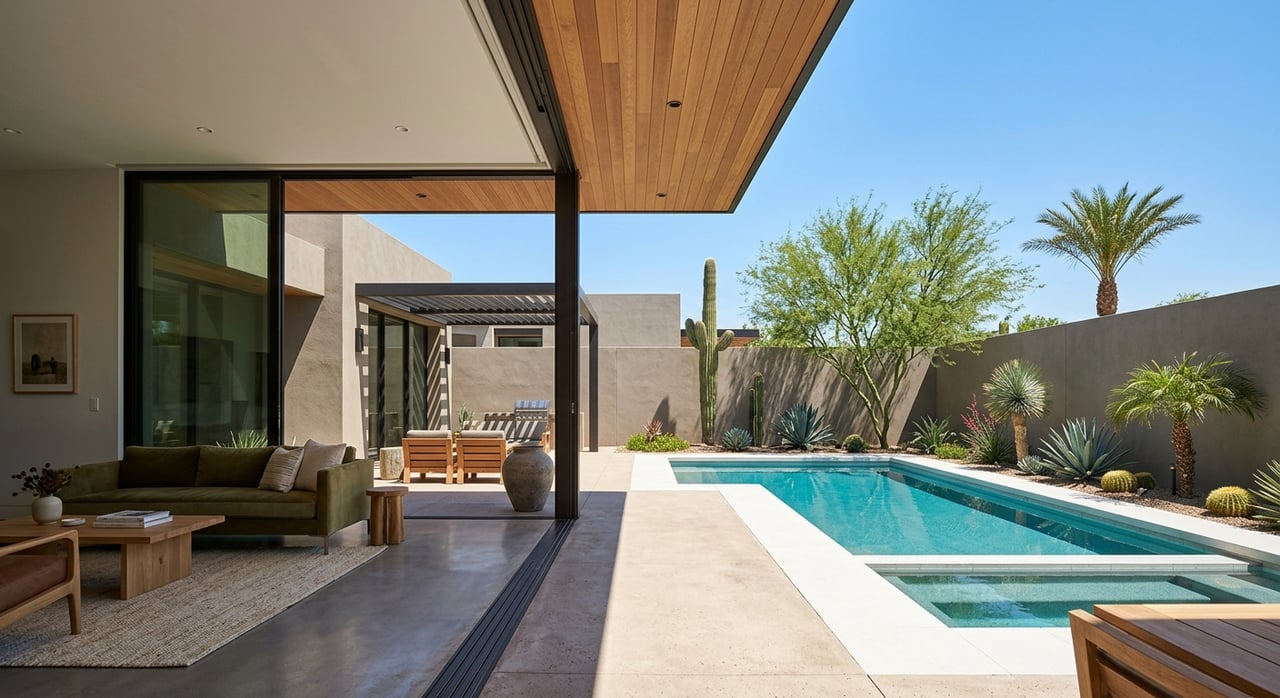
This is also the period when home performance becomes more than a convenience. Cooling capacity, shade, pool usability, and low-maintenance outdoor design all play a larger role in how comfortable a property feels from June through September.
Arizona’s monsoon season runs from June 15 through September 30. While that seasonal pattern can bring variety to the sky, the dominant summer reality for most homeowners is still heat management.
Why Shade Matters in Scottsdale
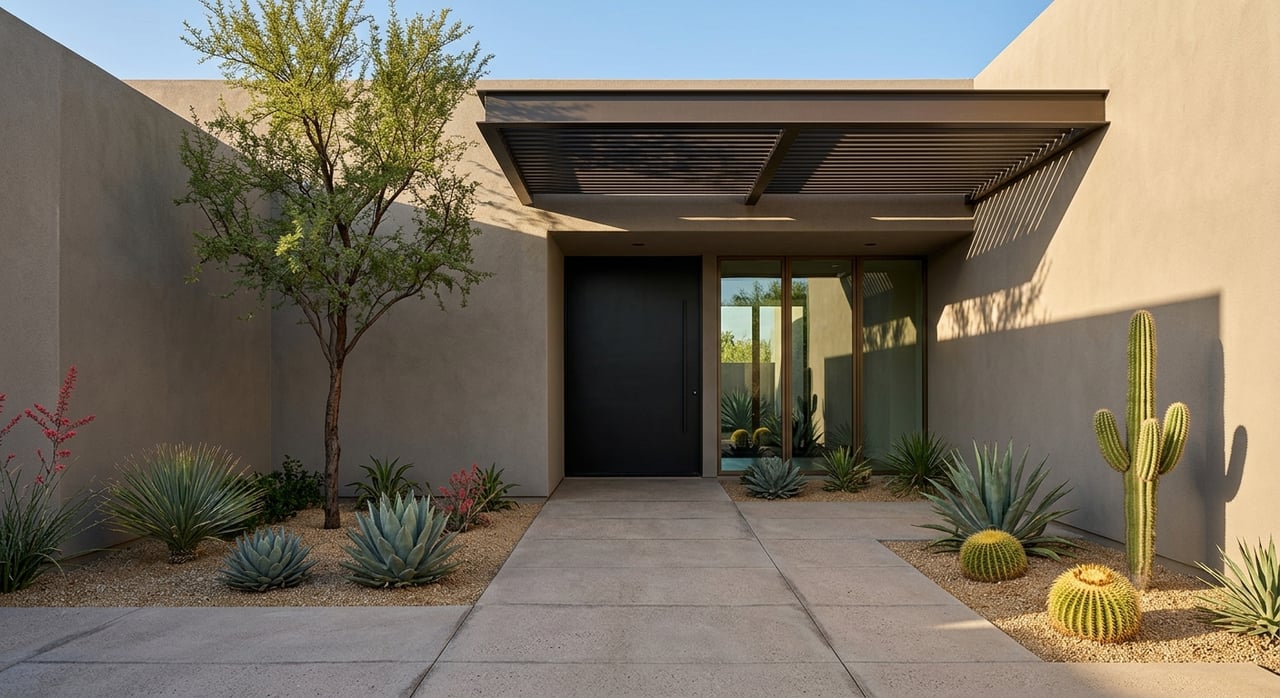
In Scottsdale, shade is not just a design feature. It is part of how a property functions. The city’s Shade & Tree Plan emphasizes desert-adapted trees, water efficiency, shade structures, and water-harvesting practices to reduce heat exposure and improve outdoor usability.
That guidance offers useful clues for luxury homeowners. Deep overhangs, covered patios, shaded courtyards, and carefully placed landscape canopy can make outdoor areas more comfortable for a longer portion of the year.
It also affects how buyers evaluate homes. A property with strong sun control and thoughtful exterior planning may simply live better in Scottsdale than one with large exposed hardscape and limited cover.
Water Efficiency Is a Luxury Ownership Issue
For estate homes, custom builds, and larger lots, water planning is part of smart ownership. Scottsdale Water offers homeowner support for irrigation-clock review, leak detection, smart controllers, pool water tips, rebates, and outdoor water-efficiency checks through its water resources programs.
That matters because landscaping, irrigation design, and pool systems can all influence upkeep and seasonal comfort. The same city resource notes that about 90% of Scottsdale’s drinking water comes from the Central Arizona Project and Salt River Project, which makes water-aware property planning especially relevant.
In practical terms, buyers and sellers alike should pay attention to how a home handles outdoor water use. Desert-adapted landscaping, efficient irrigation, and manageable exterior design are not just environmental talking points. They are part of the ownership experience.
Location Feels Different by Season
One of the more interesting parts of Scottsdale living is how location can feel different across the calendar. Homes near WestWorld, Old Town, preserve trailheads, the Greenbelt, or golf corridors may feel especially active in winter and spring, when events and outdoor recreation are in full use.
By contrast, homes that offer strong shade, easy-maintenance landscaping, and lock-and-leave practicality may feel especially comfortable during summer. This does not make one setting better than another. It simply shows that the right property often depends on how you plan to live in Scottsdale across the entire year.
That is where local guidance matters. For some buyers, the ideal home is centered on entertaining and seasonal activity. For others, it is privacy, low-maintenance design, and a retreat-like environment that carries well through summer.
What Buyers Should Look For
If you are buying a luxury home in Scottsdale, it helps to think beyond finishes and square footage. A property should support the way you expect to live in both the social season and the heat season.
Key features to evaluate include:
- Covered patios and shaded outdoor seating
- Pool systems and pool-area usability
- Cooling performance and sun exposure
- Water-efficient landscaping and irrigation design
- Easy-maintenance exterior spaces
- Access to golf, trails, Old Town, or event venues depending on your lifestyle priorities
For custom-build buyers, this seasonal lens matters even more. Shade strategy, orientation, glazing, outdoor room placement, and landscape planning can all influence how the finished home performs throughout the year.
What Sellers Should Highlight
If you are preparing to sell a Scottsdale luxury home, seasonal livability should be part of the story. Buyers are not just evaluating the architecture. They are assessing how the property will function in January, April, and August.
That means your marketing should clearly show:
- Outdoor entertaining spaces during cooler months
- Pool, shade, and covered patio areas for summer use
- Low-maintenance desert landscaping
- Access to nearby recreation, events, or trails supported by the property’s location
- Design choices that help the home feel comfortable year-round
For higher-value homes, that positioning benefits from careful advisory work. The goal is not simply to list features, but to present the property as a well-matched lifestyle asset within Scottsdale’s climate and seasonal rhythm.
Scottsdale rewards homeowners who understand how the city really lives across the calendar. If you want measured guidance on buying, selling, or evaluating a luxury property through that lens, Brad Qualley offers a discreet, advisor-led approach shaped by local market knowledge and fiduciary discipline.
FAQs
When is outdoor living most enjoyable in Scottsdale?
- Generally, late fall through spring is the most comfortable outdoor window, with temperatures closer to the 60s, 70s, and low 80s rather than peak summer heat.
How hot does Scottsdale get in summer?
- According to NOAA normals, average highs reach 104.1°F in July, 102.9°F in August, and 98.2°F in September, with warm overnight lows continuing through much of summer.
What home features matter most for year-round Scottsdale living?
- Shade, cooling capacity, pool usability, water-efficient landscaping, and easy-maintenance outdoor spaces are some of the most practical features for year-round comfort.
What happens during Scottsdale’s monsoon season?
- The National Weather Service defines Arizona monsoon season as June 15 through September 30, which falls during Scottsdale’s hottest stretch of the year.
What fills Scottsdale’s social calendar in cooler months?
- Cooler months are shaped by events and activities such as Barrett-Jackson, the WM Phoenix Open, spring training, Thursday ArtWalk, golf, hiking, and other seasonal gatherings.
Why does local guidance matter when buying or selling in Scottsdale?
- Scottsdale homes are used differently across the year, so informed guidance can help you evaluate location, design, maintenance, and marketing strategy through a more practical seasonal lens.