Buying a North Scottsdale lot for a future custom home can feel simple at first glance. You find the view, the setting, and the address you want, and it is easy to assume the next step is just hiring an architect. In reality, timing matters because some lots move cleanly into design, while others require added review before plans can become permits. If you want to make a smart land purchase with fewer surprises, it helps to understand what can affect the pre-construction timeline. Let’s dive in.
Why timing matters in North Scottsdale
In North Scottsdale, the timing of a lot purchase is closely tied to what the parcel needs before a home can be designed or permitted. A lot that is already platted, utility-ready, and free of major site complications may allow you to move into design much faster.
Other parcels can take longer because they involve washes, easements, native plant requirements, or overlay constraints. That does not make them bad opportunities, but it does mean your closing strategy and planning calendar should reflect those added layers.
Start with lot-specific constraints
Before you focus on architecture, finishes, or construction dates, look at the site itself. In North Scottsdale, one of the biggest factors is whether the parcel is affected by Scottsdale’s Environmentally Sensitive Lands Overlay, often called ESL.
The ESL applies to a large area of desert and mountain land north and east of the Central Arizona Project canal. It requires Natural Area Open Space preservation based on landform and slope, and it protects features such as washes, ridges, peaks, and native vegetation. If a lot includes a wash, Scottsdale says wash modifications begin with a pre-application process.
That means two lots with similar views and acreage can have very different readiness for a custom build. If one site is straightforward and the other has wash or slope-related constraints, the planning timeline may look very different.
Native plants can affect timing
Scottsdale’s Native Plant Ordinance also matters early in the process. For single-family projects, the city requires a native plant inventory report and site plan during building plan review.
If protected plants need to be removed or relocated, a native plant permit must be issued before salvage work begins. In practical terms, that can affect both your schedule and your site prep planning before construction starts.
Easements and recordation can delay permits
Some lot issues are less visible when you first tour a property. According to Scottsdale’s recordation guidance, lot creation or parcel-line adjustments are processed through the city, and if staff determine that a new easement or easement modification is needed, that recordation becomes a prerequisite to permit issuance.
This is one reason due diligence before closing matters so much. A lot may appear buildable in broad terms, but permit timing can still depend on paperwork that has to be completed first.
Understand Scottsdale’s approval sequence
As of January 6, 2026, new projects are managed through Scottsdale SPUR, the city’s planning and permitting portal. Scottsdale says single-family residential projects typically go straight to permit review and usually do not need more than administrative review and approval before permits are issued.
That is encouraging for buyers targeting a well-prepared parcel. If the lot is already in good shape from a site and utility standpoint, the path into design and permitting may be relatively direct.
For more complex projects, Scottsdale offers an optional pre-application step that can help identify issues early. The city says staff typically schedules a pre-application meeting within about one week, and first-review comments are usually issued within 30 days.
When buying earlier helps
Buying early can make sense when you are confident in the lot’s fundamentals and want to secure a scarce parcel before competition increases. This can be especially relevant for view lots or acreage where the land itself is the rare asset.
If the parcel is already platted, utility-ready, and not burdened by unresolved overlay or easement issues, you may be able to move from acquisition into planning without a long delay. In that scenario, owning the lot sooner can support your design timeline.
When waiting can reduce risk
Waiting can be the better move when major unknowns remain. If a parcel may need wash work, utility extensions, right-of-way coordination, native plant handling, or easement recordation, buying before those issues are understood can stretch your pre-construction calendar.
Scottsdale’s published process suggests that these lot-specific requirements can become timing drivers. If your goal is a more predictable build schedule, getting clarity on those items before closing can reduce uncertainty.
Budget timing is part of purchase timing
Lot timing is not only about permits. It is also about when key costs are triggered and how they affect your capital plan.
Scottsdale states that development fees are one-time payments and, for most properties, are due when a building permit is issued. The city also notes that residential plan review fees include air-conditioned and non-air-conditioned square footage, plus grading and drainage charges based on landform.
If a parcel needs new sewer service, sewer development fees may apply. If public water or sewer line extensions are required, those may be handled through the city’s extension participation program.
Fee estimates can be requested early
Scottsdale’s permit fee estimate page says estimates usually take two to three business days. The city also states that plan review fees are due at the time of application and that applications are not processed until payment is received.
For you as a buyer, that means the best purchase timing often includes an early fee and infrastructure review. A lot can look attractive at the purchase stage but still carry costs that change your all-in build budget.
Off-site work can change the schedule
Scottsdale also notes that a right-of-way permit and utility-related approvals may be required for certain work in public rights-of-way. So even if the lot itself appears ready, off-site utility or frontage work may still need to be sequenced.
This is one of the most common reasons a lot purchase timeline and a build-start timeline do not perfectly match. The land may be acquired, but the path to permit and construction can still depend on separate approvals.
How long the full build may take
Many buyers underestimate how much of the timeline happens before actual construction. Design, engineering, permit review, and lot-specific issue clearing can take meaningful time before dirt work begins.
Once permits are issued and the project is ready to move, the build itself can move faster than many people expect. According to NAHB data summarized from the Census Bureau, the average single-family home in 2024 took 9.1 months from start to finish, including 1.4 months from authorization to start and 7.6 months to complete construction.
Custom homes often take longer. The same NAHB summary reports that owner-built homes averaged 15.1 months, and larger homes took more time as size increased. Homes between 4,000 and 4,999 square feet averaged about 10.7 months, homes between 5,000 and 5,999 square feet averaged about 14 months, and homes over 6,000 square feet took almost 16 months.
Permits often lead quickly to starts
NAHB also reports that nearly half of single-family homes begin construction in the same month the permit is issued, and more than 90% start within two months. That is an important planning point if you are trying to decide when to buy land.
In other words, once the lot is cleanly positioned and the plans are ready, the shift from paperwork to active construction can happen quickly. The real timing question is often how long it takes to get the site and approvals lined up in the first place.
Construction still moves in stages
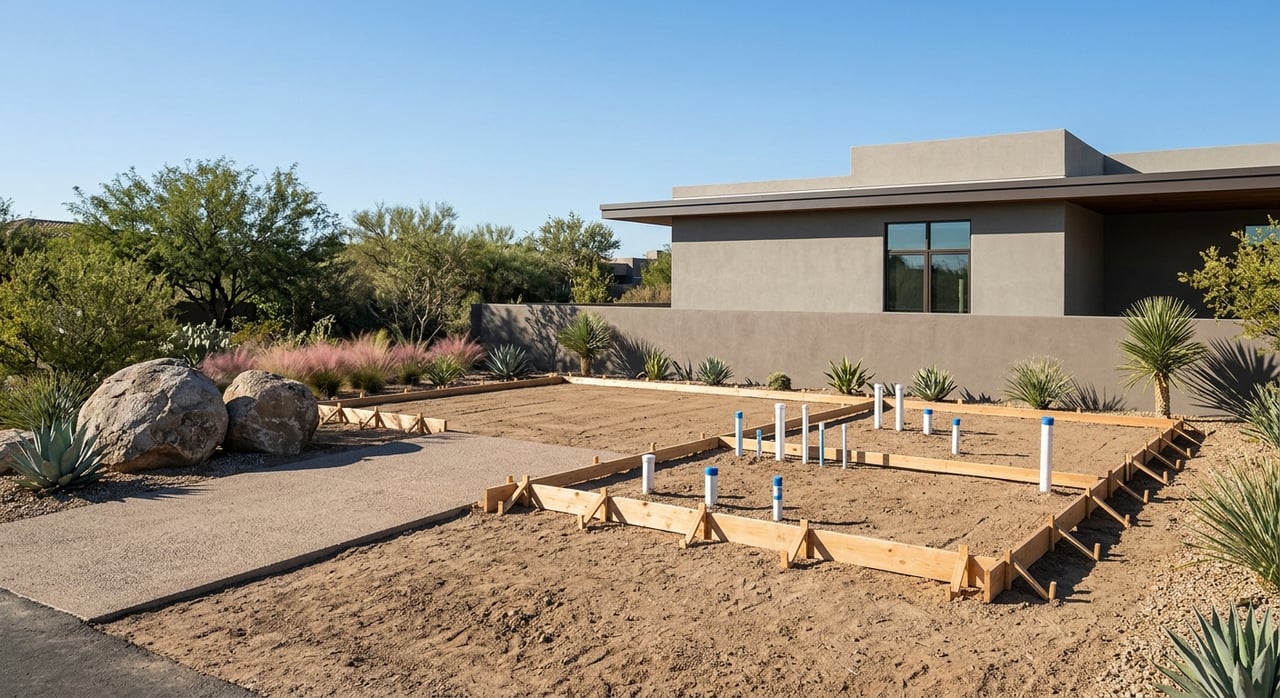
Scottsdale’s inspection process follows phased construction milestones, including pre-site review, foundation, under-slab, framing, insulation, lath or gypsum board, and final inspection. A Certificate of Occupancy is issued after final approval.
That phased sequence is another reason to build your timeline from the lot backward. A delay at the front end can affect everything that follows.
A practical way to time your purchase
If you are evaluating a North Scottsdale lot for a future custom home, a careful sequence usually works best. Start with lot-specific due diligence, then align your architect and builder input, and then decide whether immediate closing or a more measured approach fits the site.
A practical checklist includes:
- Confirm whether the lot is affected by ESL or other site constraints
- Identify any washes, steep slopes, or protected native plants
- Review whether easement recordation or parcel adjustments may be needed
- Ask whether utility extensions, sewer service, or right-of-way work are required
- Request early fee estimates to understand likely permit-related costs
- Compare your desired move-in date with realistic design, permitting, and construction durations
This kind of planning is especially useful in North Scottsdale, where view lots and custom estate parcels can be highly desirable but not equally build-ready. The right purchase timing is usually the one that matches the parcel’s actual condition, not just the listing presentation.
When advisory support adds value
A North Scottsdale lot purchase is not just a land acquisition. It is the first decision in a much larger design, permitting, and construction process.
That is why many buyers benefit from an advisor who understands land, custom-build planning, and transaction detail at a high level. When the purchase involves overlays, easements, utility questions, or timing-sensitive contract terms, disciplined review can help you avoid preventable delays.
If you are weighing when to acquire a North Scottsdale lot for a future custom build, Brad Qualley can help you evaluate the property, the process, and the timing with a more strategic lens.
FAQs
What should you check before buying a North Scottsdale lot for a custom build?
- You should confirm whether the parcel is affected by ESL, washes, protected native plants, easement issues, or utility and right-of-way requirements before you close.
How does Scottsdale ESL affect a North Scottsdale lot purchase?
- ESL can require Natural Area Open Space preservation and may affect how a site is designed, reviewed, or modified, especially if the lot contains washes, slopes, ridges, or native vegetation.
Can a North Scottsdale lot need easement work before permits are issued?
- Yes. Scottsdale says that if a new easement or easement modification is required, recordation can become a prerequisite to permit issuance.
How long does a custom home build usually take after permits?
- National NAHB data shows custom owner-built homes averaged 15.1 months in 2024, and larger homes often took longer depending on size and complexity.
When is the best time to buy a North Scottsdale lot for a future build?
- The best time is usually after you understand the lot’s site constraints, permitting path, utility needs, and likely fee exposure so your purchase timing aligns with your actual build timeline.