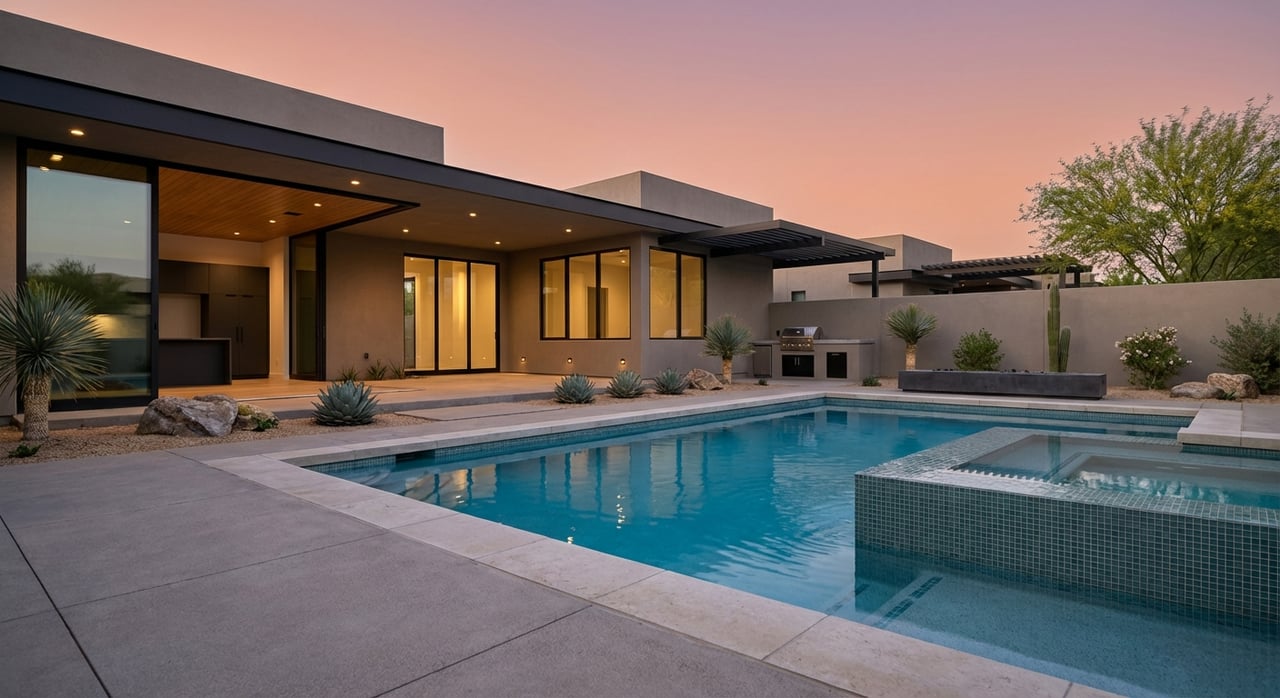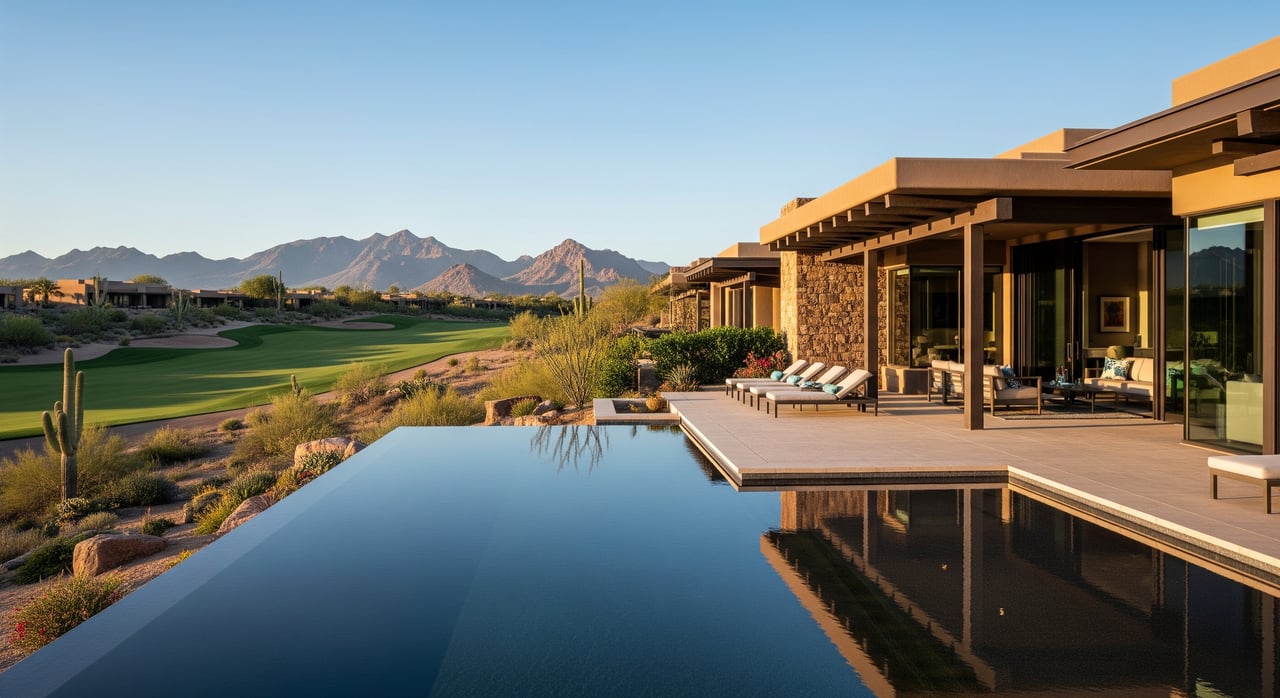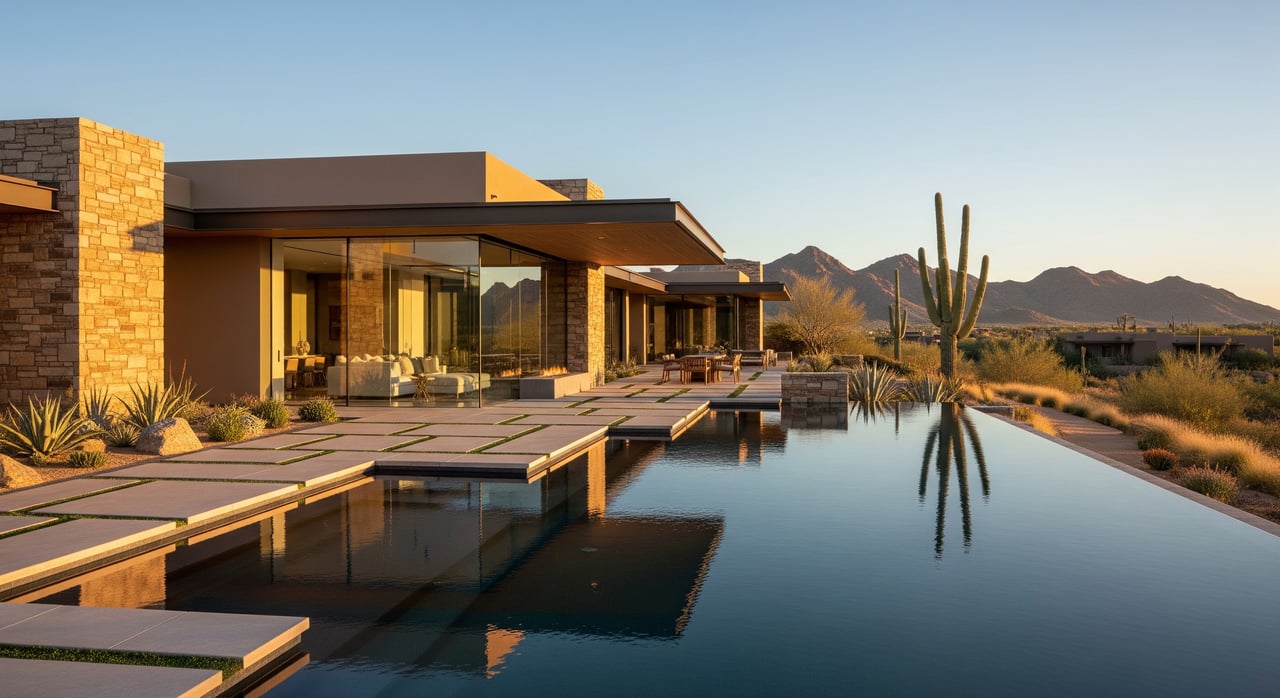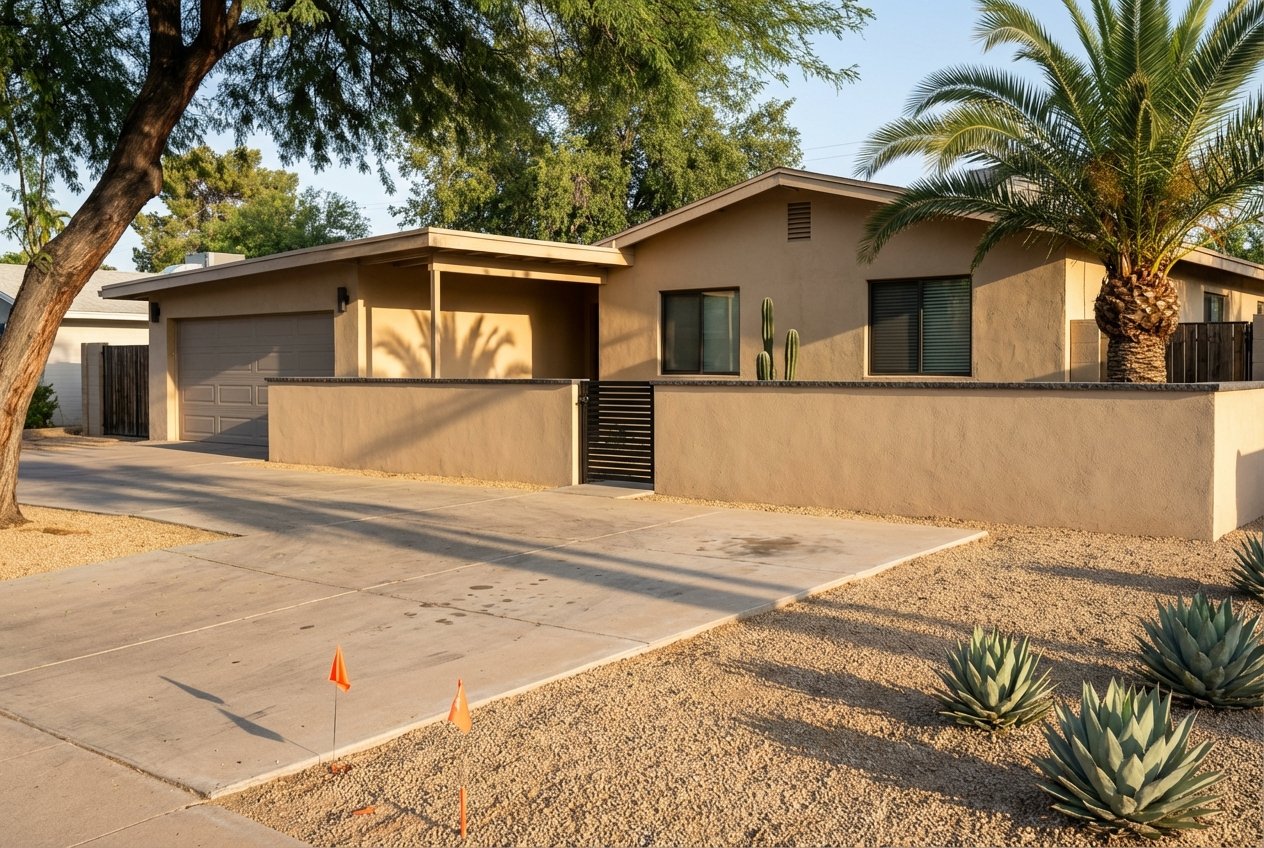
Looking at a tired house on a great acre in Paradise Valley and wondering if the real value is the dirt? You are not alone. In this town, land often carries the deal, but hillside rules, permits, and view premiums can swing the numbers fast. In this guide, you will learn how to price a tear-down, account for slope and views, and map your due diligence so you avoid costly surprises. Let’s dive in.
Why land value works differently
Paradise Valley’s planning policy protects a low-density, one-acre character. The 2022 General Plan emphasizes a primarily one-acre residential community, which keeps small-lot supply tight and supports the value of buildable acre parcels. See the town’s policy context in the General Plan overview for how this shapes land demand and pricing priorities in practice. Read the General Plan.
Zoning designations, including R-43 one-acre minimums, govern uses, setbacks, coverage, and height. These rules define your building envelope and influence the highest and best use for a tear-down. You can review permit handouts and submittal requirements that reference these controls on the town’s site. See permits and handouts.
Some parcels along key arterials sit within visually significant corridors, where the town prioritizes streetscape quality. If your lot fronts a corridor such as Lincoln Drive or Tatum Boulevard, factor in potential design expectations during planning. Explore the corridors plan.
Hillside rules that change value
If slope under the building pad reaches 10 percent or more, Article XXII hillside regulations apply and the Hillside Building Committee must approve your plans. These rules limit disturbance, shape grading and retaining strategies, and may require revegetation and performance bonds. No building permits are issued for hillside development until the Committee approves the plan. Review Article XXII and hillside materials.
For buyers, hillside status is a cost and schedule driver. Expect added design time, specialized engineering, and construction staging plans. These items can be well worth it for premium views, but they belong in your pricing model from day one.
How to value a tear-down lot
Start with as-if-vacant value
Your baseline is the site’s as-if-vacant value. Use the best vacant-lot comparables you can find that match on lot size, view quality, slope, access, and neighborhood character. If you are analyzing an improved property, appraisers often apply the extraction method, which derives land value by removing the depreciated value of improvements from the sale price. These approaches are standard in appraisal practice. See assessor and appraisal guidance.
Adjust for views and setting
Mountain and city-light views are real price drivers. Research shows view premiums often land in the mid single digits to low double digits, depending on permanence and scarcity. In Paradise Valley, quantify the premium using paired sales when possible, and reference multiple closings with similar vistas to avoid overgeneralizing. Review a view premium study. For additional context on how amenity views influence pricing, see broader literature on residential view impacts. Read an amenity view overview.
Subtract removal and site-prep costs
From the as-if-vacant value, deduct the hard costs to get to a buildable pad. In Paradise Valley, a demolition permit is required when removing more than 12 linear feet of a wall or fence or more than 12 square feet of roof structure. Expect to provide a Dust Control Plan, a Site Plan, a SWPPP when applicable, and a Native Plant Preservation Plan. If demolishing two or more buildings, the town calls for proof of an AHERA asbestos inspection. Confirm the demolition checklist.
Also include grading and drainage engineering, possible retaining walls, and longer utility runs as site costs. If total land disturbance reaches 1.0 acre, ADEQ stormwater obligations and a SWPPP apply. These engineering and compliance line items can materially change your net land number. See grading and stormwater references.
Carrying time and entitlement risk
Time is money. Plan for Hillside Committee review where applicable, plan reviews by the town, and potential HOA acknowledgement. Include carrying costs, such as taxes and interest, until your permit is issued. Use the town’s pre-application process to clarify your path early and reduce surprises. Start with a pre-application.
Due diligence checklist
Run this checklist before you finalize price:
- Meet with Town Planning in a pre-application to confirm hillside status, washes, and submittals. Access the planning portal.
- Order an ALTA survey with topography. On sloped or rocky sites, add a geotechnical investigation.
- Verify utilities early, including water, sewer or septic verification, and electric transformer location and capacity. Check permit guidance.
- Review FEMA flood maps and any wash easements that could limit disturbance.
- Confirm any HOA or private deed restrictions and request relevant CC&Rs.
- Pull title exceptions and look for easements, access agreements, or recorded view or conservation restrictions.
- Obtain preliminary bids for demolition, abatement, hauling, grading, and civil engineering to refine your model.
Common permits and submittals
- Demolition permit: triggers include removing more than 12 linear feet of wall or 12 square feet of roof structure. Submittals typically include Dust Control, Site Plan, SWPPP when applicable, and a Native Plant Preservation Plan. AHERA asbestos inspection proof is requested when demolishing two or more buildings. Review requirements.
- Grading and drainage: sealed G&D Plans by an Arizona civil engineer are common for new SFRs and sloped sites. If disturbance is at or above 1.0 acre, incorporate ADEQ NOI and SWPPP obligations.
- Hillside conditions: expect limits of disturbance, staging and access plans, revegetation or native plant preservation, and financial assurance or performance bonds where applicable. See hillside guidance.
Pricing template you can use
Use this simple land-residual framework to guide your offer:
- Step A: Establish the as-if-vacant site value using the best vacant-lot comps or by extraction from improved sales. Reference appraisal methods.
- Step B: Subtract removal costs, including demolition, abatement, tree removal, and debris hauling. Confirm demolition checklist.
- Step C: Subtract entitlement and site costs, such as grading and drainage engineering, SWPPP, retaining walls, driveway and utility work, and any required performance bond or fees. See hillside and grading references.
- Step D: Subtract carrying costs and add a contingency suited to risk and timeline.
The result is your buyer’s maximum land price. Cross-check it against your target finished value and your lender’s appraisal assumptions before you proceed.
When a tear-down may not pencil
A tear-down can stall when view premiums are modest, site-prep costs are high, or hillside restrictions compress your buildable envelope. Private deed restrictions or HOA design controls can also limit your intended program. The town has been working on code updates from time to time, so verify current language and any pending amendments with Community Development before you rely on a specific pathway.
Work with an advisor who knows the dirt
If you want a clear view of land value, hillside risk, and the right sequence to protect your time and capital, align with an advisor who specializes in Paradise Valley lots and custom estates. With legal training and financial fluency, you gain a disciplined approach to contracts, title, and valuation, plus a practical plan for due diligence and negotiation. If you are ready to evaluate a tear-down, price a view lot, or request a confidential home valuation, connect with Brad Qualley for a focused, data-driven strategy.
FAQs
How are Paradise Valley tear-downs typically priced?
- Buyers often price the dirt using as-if-vacant value from vacant-lot comps or the extraction method, then deduct demolition, entitlement, and carrying costs. See appraisal guidance.
What triggers hillside review in Paradise Valley?
- Article XXII applies at 10 percent slope under the building pad or in mapped hillside areas, with Hillside Building Committee approval required before permits are issued. Review hillside rules.
What permits and plans are needed to demolish a home?
- Demolition typically requires a Dust Control Plan, Site Plan, SWPPP when applicable, and a Native Plant Preservation Plan, and may require AHERA asbestos inspection proof for two or more buildings. Check demolition checklist.
How do I estimate a view premium for a lot?
- Use paired sales when available, or triangulate from several comparable sales with similar vistas; research suggests mid single digit to low double digit premiums are common for mountain or city-light views. Read a view study.
Do utility factors affect buildable area and cost?
- Yes. Verify sewer versus septic, water, and electric infrastructure early. Longer runs, septic upgrades, or transformer changes can add cost and influence your build envelope. See permit references.
How can I reduce entitlement uncertainty before I commit?
- Schedule a town pre-application meeting, confirm hillside or wash constraints, and obtain early estimates from your civil engineer and contractors to validate a conservative land residual. Start the pre-application.