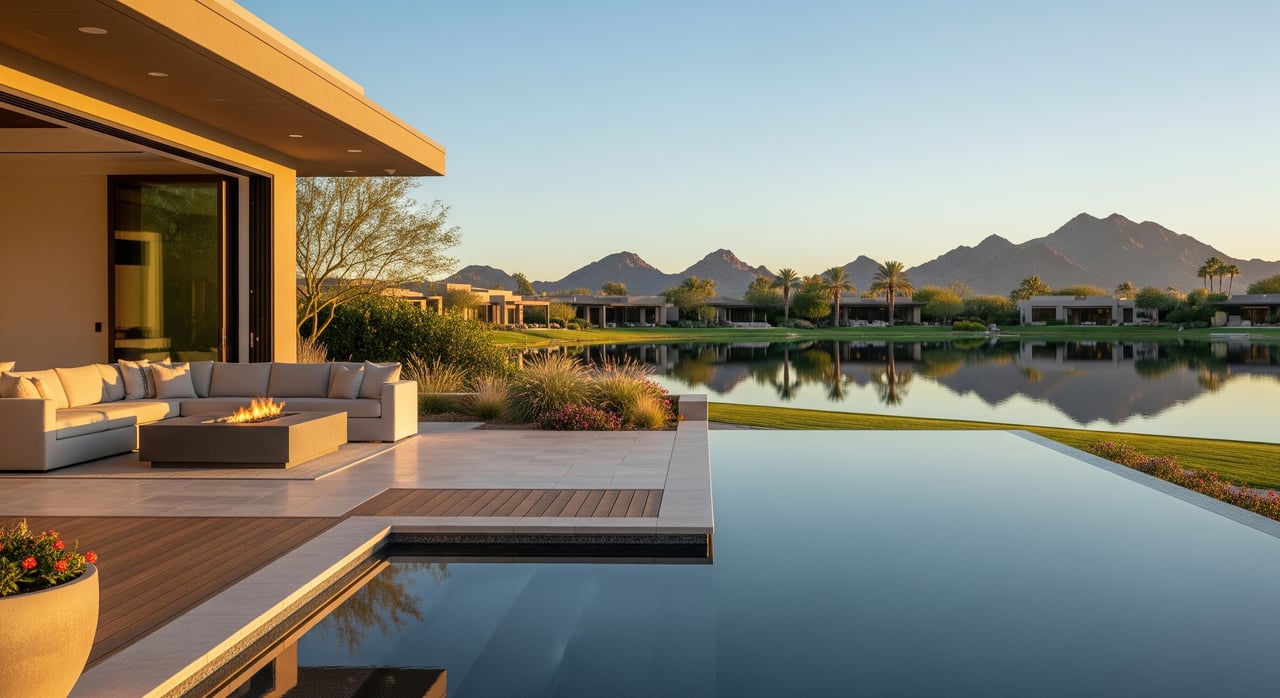
Water in the desert is irresistible. If you are drawn to the calm of a lake view in McCormick Ranch, you are not alone. Waterfront here offers beauty and a different daily rhythm, but it also comes with rules, maintenance, and a few extra questions to answer before you buy. This guide explains what “waterfront” really means in McCormick Ranch, how it affects lifestyle and value, and the due diligence steps that protect you. Let’s dive in.
What “waterfront” means here
In McCormick Ranch, “waterfront” usually refers to man‑made lakes, ponds, and connected waterways created as part of the master‑planned community and golf settings. These features are designed for aesthetics, neighborhood ambiance, and stormwater management. They are not natural rivers. Ownership and maintenance can vary between the master association, a sub‑HOA, public agencies, or private lot owners.
Many homes back to a lake with a landscape buffer between the yard and the water. Others enjoy open water views with no direct access. Listings often highlight a “lake view,” even where shoreline use or structures are restricted by recorded rules or easements. The exact legal status of the shoreline matters because it controls what you can do and who handles maintenance.
Ownership and access rights
Before you fall in love with a view, confirm who owns the lake edge and paths behind the property. Ask for recorded plats, easements, and the CC&Rs. These documents clarify whether the shoreline is common area for all residents, limited to association members, or privately owned by adjacent lots. They also outline what owners can and cannot build at the water’s edge.
Direct shoreline vs. lake view
A true shoreline lot may feel more connected to the water but could come with stricter rules and higher maintenance sensitivity. A lake‑view home with a common‑area buffer often trades direct access for added privacy and simpler upkeep. Decide what you value most, then confirm that the recorded rights match your lifestyle goals.
Daily lifestyle benefits
Views, light, and microclimate
Water opens a landscape. Yards facing the lake often feel more expansive with reflective light that changes through the day. You may notice cooler evening breezes compared with interior lots. Orientation and landscaping will shape your privacy and how much the water influences natural light inside the home.
Paths and neighborhood connectivity
McCormick Ranch is known for connected sidewalks and multi‑use paths. Many lakes have adjacent walking or biking routes that attract joggers, dog‑walkers, and cyclists. This access can be a major plus for your daily routine. It can also add periodic foot and bike traffic near your yard, so consider the tradeoff between convenience and privacy.
Wildlife you will see
Urban lakes in Scottsdale commonly attract ducks, geese, coots, herons, egrets, turtles, and small shorebirds. You may also see rabbits, coyotes, and lizards in the landscape. For many buyers, bird activity is a highlight. Expect some seasonal rhythms like nesting behavior, droppings on hardscape, and occasional noise, especially at dawn and dusk.
Recreation and permitted uses
Most community lakes support passive recreation such as walking and birdwatching. Fishing may be allowed in some areas, while boating and swimming are often restricted by HOAs for safety and water quality. Motorized boats are typically not allowed on these small lakes. If fishing or boating matters to you, get the rule in writing from the association’s governing documents.
Practical checks before you buy
Confirm ownership and easements
Request the recorded plat, property survey, and any shoreline easements. Verify who owns the water body and whether the shoreline behind the home is private or common area. Ask if any license is required to step beyond your fence line or maintain plantings near the water.
Study HOA rules and enforcement
Read the CC&Rs, bylaws, and current rules for both the master association and any sub‑HOA. Look for policies on shoreline access, docks, fishing, boating, swimming, and pet rules. Request recent meeting minutes to see if the board discussed lake‑related issues such as algae, erosion, or disputes. This helps you spot patterns before closing.
Understand maintenance and reserves
Waterfront features need periodic care. Confirm who handles shoreline stabilization, erosion control, algae treatment, irrigation links, and path repair. Ask for the HOA’s reserve study and recent budgets. Review any special‑assessment history tied to shoreline or lake infrastructure. Strong reserves can reduce the risk of surprise costs.
Water quality and mosquito control
Ask for recent water quality reports and any vendor contracts for aquatic management. If you are sensitive to clarity or odors, review algae monitoring and chemical treatment logs. Clarify how mosquito control is handled and whether efforts are coordinated with county vector control programs. Seasonal conditions and water circulation affect nuisance levels.
Flood risk and insurance
Some lakes are integrated with stormwater retention or detention. Check FEMA flood maps and any city floodplain designations for the parcel. Then ask your insurance agent for written guidance on premiums and liability coverage. Water adjacency can change risk tolerance for some carriers, especially around docks or frequent visitors.
Environmental and regulatory notes
Confirm whether any local, state, or federal rules apply to the shoreline, especially during nesting seasons. If you plan to add lighting, hardscape, or vegetation near the water, your HOA and relevant agencies can explain what is allowed and the process for approvals.
Property condition items to inspect
Waterfront edges can show erosion or settling, and retaining walls may need repairs over time. Ask your inspector to evaluate shoreline stability, drainage, and any wall or revetment conditions. Also check irrigation systems, pest activity, and any signs of standing water during seasonal changes.
How waterfront affects privacy and value
Open water views can enhance a home’s appeal and perceived space. That said, paths and community areas can add occasional noise or passersby. Value is influenced by the exact setting, view corridor, privacy, orientation, and the rules that govern access and use. The best way to price waterfront is with recent comparable sales that specify lake adjacency and view quality. Ask your advisor to isolate comps where the water was a material factor in the final price.
A buyer’s due diligence checklist
Use this list to organize requests from the seller, HOA, and your agent:
- Recorded plat, property survey, and any shoreline or path easements
- CC&Rs, bylaws, rules, and architectural guidelines for all applicable associations
- Recent HOA meeting minutes addressing lakes, paths, erosion, or algae control
- Current budgets, reserve studies, and a list of recent or pending special assessments
- Shoreline or retaining wall maintenance records, invoices, or warranties
- Water quality reports, algae treatment logs, and vector‑control correspondence
- Written policies on fishing, boating, docks, and swimming
- FEMA flood zone designation and any elevation certificate on file
- Seller disclosure with any prior insurance claims related to water or erosion
- Contact info for local agencies handling parks, planning, flood control, and vector control
Smart inspection moves
- Add a shoreline and retaining‑wall review to the general home inspection.
- Walk the path line and common area during different times of day to gauge activity and sound.
- If water quality is a top concern, consult an aquatic or environmental specialist.
- Ask your insurance agent for parcel‑specific quotes and liability guidance before you remove contingencies.
- Have your agent pull MLS comps that clearly note lake adjacency, view quality, and path proximity.
Living well by the water
If you choose a waterfront or lake‑view home, a few habits can keep the experience positive. Align landscaping with HOA guidelines and consider plantings that deter birds from roosting on hardscape. Follow leash and path etiquette to keep the area enjoyable for everyone. During peak seasons, plan for light maintenance like rinsing patios more often and adjusting outdoor furniture placement to avoid droppings.
Bottom line
Waterfront in McCormick Ranch offers a peaceful daily backdrop, easy access to walking paths, and memorable wildlife watching. In return, you agree to a defined set of rules and shared maintenance priorities. When you verify ownership, rules, reserves, water quality practices, and insurance implications up front, you protect your lifestyle and your investment. A careful, document‑driven approach is the best way to buy with confidence.
Ready to evaluate a specific lake‑area home or price your property near the water? Request a confidential, document‑driven consultation that aligns with your goals. To start, contact Unknown Company and Request a Confidential Home Valuation.
FAQs
What counts as “waterfront” in McCormick Ranch?
- It typically means a home that backs to a man‑made lake, pond, or waterway, with either direct shoreline, a common‑area buffer, or a strong lake view. The exact rights depend on recorded plats, easements, and HOA rules.
Are docks or boats allowed on these lakes?
- Often no. Many community lakes prohibit docks, swimming, and motorized boats. Always confirm permitted uses in the CC&Rs and association rules before you buy.
Do lake‑area homes have higher insurance costs?
- Possibly. Proximity to water can change liability considerations and may affect premiums. Ask your insurer for written, parcel‑specific quotes and review any flood zone designations.
How are mosquitoes and algae managed around the lakes?
- Associations often use professional aquatic services and coordinate with county vector control. Request water quality records and treatment logs to understand seasonal patterns and vendor practices.
Who maintains the shoreline and walking paths?
- It varies by location. Maintenance may fall to the master association, a sub‑HOA, a public agency, or adjacent owners. Confirm responsibilities in the CC&Rs, recorded plats, and HOA budgets and minutes.