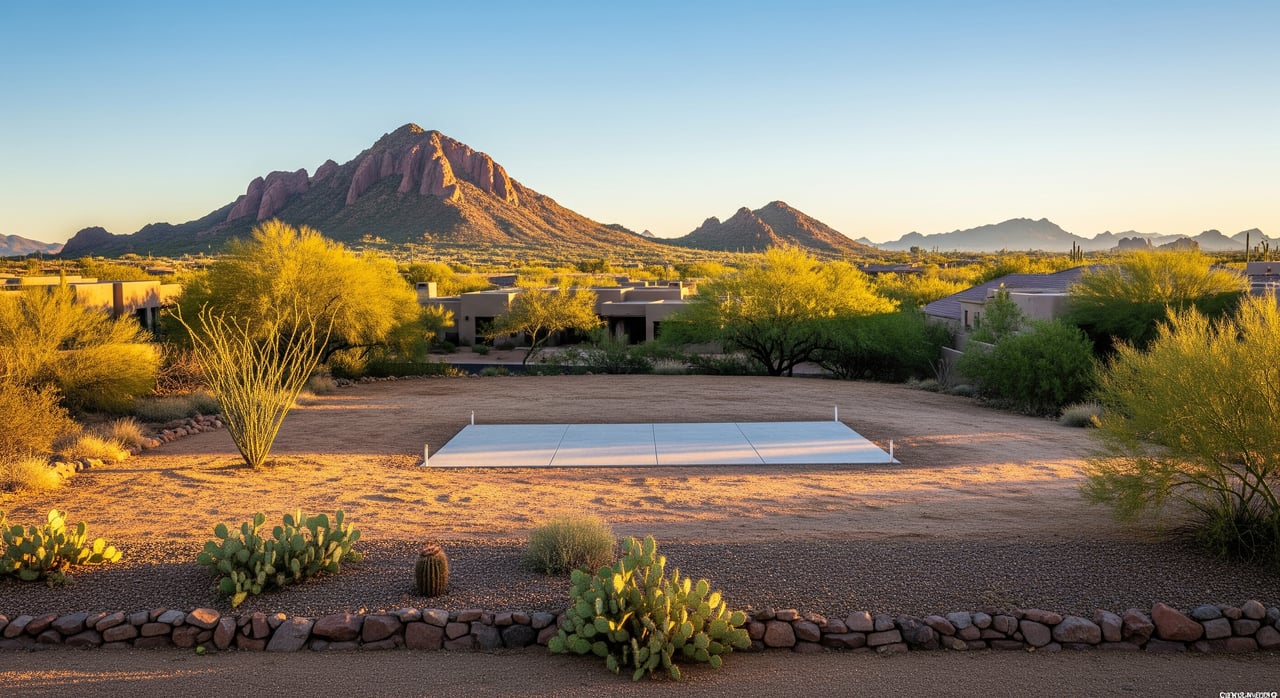
You fall in love with the view, then wonder what it really takes to build on that slope. If you are eyeing a Paradise Valley lot, the right due diligence can save months of delay and six-figure surprises. In this guide, you get a clear, phased plan to validate feasibility, protect your budget, and plan your path to permits. Let’s dive in.
Your step-by-step due diligence plan
Phase A: Pre-offer checks
Start with title and access. Request a title commitment excerpt and the recorded plat. Confirm the legal description, access type, and any recorded easements, CCRs, or mineral reservations that could limit where you build.
Confirm zoning and overlays. Verify the lot’s zoning district, setbacks, height limits, lot coverage rules, and whether a hillside or scenic overlay applies. Ask planning staff how height is measured and how slope affects disturbance limits.
Scan for obvious constraints. Review aerials and parcel maps for steep slopes, visible washes, or utility corridors. Check federal flood maps and county flood-control indicators to flag wash or floodplain issues.
If there is an HOA, obtain CCRs early. Note architectural, landscaping, and material restrictions that may add cost or time.
Phase B: Under contract investigations
Order an ALTA or boundary survey with topo. Your survey should locate boundaries, improvements, recorded easements, building setback lines, and visible utilities. For hillside sites, request tight topo contours and spot elevations to support massing and grading studies.
Complete geotechnical testing. Engage a geotechnical engineer for borings or test pits at the proposed building pad, driveway, and retaining walls. Ask for lab testing for expansive soils and recommendations for foundations, retaining walls, and drainage. If sewer is not confirmed, schedule perc tests and septic feasibility.
Verify utilities in writing. Obtain capacity or service-availability letters from water, sewer or septic authority, electric, gas, telecom, and the fire department for fire flow and access standards. Use Arizona 811 and utility locates to identify existing lines and avoid conflicts.
Assess drainage and environmental factors. Identify regulated washes or watercourses and request any historic drainage studies. If the site includes significant vegetation or riparian features, consult the town and state agencies about permits.
Schedule a pre-application meeting. Early feedback from Paradise Valley planning staff helps calibrate massing, height calculations from natural grade, and design review expectations.
Resolve title and easements. Confirm whether any easements can be vacated or relocated and that utility easements do not block your buildable envelope.
Phase C: Final feasibility and permitting path
Commission a site-specific geotech report if needed. Tie recommendations to the foundation plan, retaining walls, and slope-stability measures.
Advance civil engineering. Develop grading concepts, preliminary retaining-wall layouts, and an on-site stormwater strategy. Hillside submittals often require hydrology calculations.
Map the design review timeline. Estimate the number of cycles with the Design Review process, expected fees, and how this integrates with building permit and engineering reviews.
Price constructability. Obtain preliminary estimates for grading, export or import, retaining structures, driveway excavation, and utility extensions. Use real numbers to confirm feasibility before closing.
Hillside rules that shape your design
Paradise Valley enforces hillside and slope standards that affect building envelopes, height measurement from natural grade, and limits on cut, fill, and total disturbance. Many projects go through Design Review, which evaluates massing, orientation, materials, and site work.
Ask planning staff the right questions. Confirm whether a hillside or scenic overlay applies. Clarify how maximum height is calculated, required setbacks from washes and property lines, and any absolute limits on cut and fill. Request the Design Review Board schedule, submittal requirements, and typical cycle times.
Plan for more iterations. Hillside lots often need additional design cycles and technical studies. That adds soft cost and time, and it may require stepped massing or more complex foundations.
Utilities: verify service and costs
Get written confirmations. Request availability or commitment letters for water, sewer or septic, electric, gas, and telecom. Ask the fire department about addressing, access, and minimum fire flow.
Confirm proximity and extension needs. Identify the nearest mains and transformers, whether undergrounding is required, and any off-site work or easements. For new builds, underground electric can increase trenching and coordination.
Watch for common impediments. Long water or sewer laterals, distant mains, or the need to extend utilities can materially impact cost and schedule. On steep sites, trenching and transformer placement can constrain the building area.
Geotechnical realities on PV slopes
A geotechnical investigation is non-negotiable for hillside sites. You need bearing capacity, slab and foundation recommendations, and slope-stability analysis for cuts, fills, and retaining walls.
Expect a detailed deliverable. Your report should include boring logs, lab tests for expansion and gradation, foundation and slab guidance, retaining wall criteria, and a plan for construction-phase testing and observation.
Plan for practical protections. Expansive soils may require moisture control, specialized slab design, or soil treatment. Retaining walls above certain heights typically require structural design and drainage behind the wall to relieve hydrostatic pressure. Corrosivity testing informs material selection for buried metal.
Timeline: what to expect
Pre-application meetings often take 2 to 4 weeks to schedule. Design Review can run multiple cycles, with each cycle ranging from about 3 to 8 weeks depending on workload and submittal quality.
Civil engineering review typically runs 4 to 12 weeks and can overlap with architecture. Building permit review generally takes 4 to 10 weeks once you submit a complete package.
Seasonal weather matters. Monsoon season can heighten erosion-control requirements and complicate earthwork scheduling.
Contract safeguards that protect you
Include a feasibility or inspection contingency. You need access for survey crews, geotechnical borings, perc tests, and utility locates. Reserve the right to terminate if findings materially affect feasibility or budget.
Address who pays for studies and whether results are shared with the seller or lender. If key issues arise, provide for escrow extensions to resolve items like utility connections or easement vacations.
Require full disclosure. Ask the seller to provide any known conditions, covenants, or prior town code issues.
Cost and risk drivers to price in
Major cost drivers on hillside builds include grading, export or import of soils, retaining walls, deep or specialized foundations, and off-site utility extensions. Multiple design-review cycles also add soft costs.
Key risk drivers include easements that constrain the envelope, shallow bedrock or undetected rock that complicates excavation, unfavorable soil conditions that force specialized foundations, and limited water or sewer availability.
Use your feasibility period to put real numbers to each driver. An early, honest cost picture is essential to avoid scope creep later.
Questions to ask your team
Ask your surveyor if they can deliver ALTA/NSPS standards and 1-foot contours in the build area. Confirm utility locations and existing retaining walls on the topo.
Ask your geotechnical engineer about the number and depth of borings, the lab tests they will run, and whether they provide construction-phase observation and testing.
Ask your civil engineer to estimate cut-fill balance, identify hydrology requirements, and flag any off-site drainage impacts or easement needs.
Ask planning staff if a pre-application is recommended, whether any hillside or scenic overlays apply, and what the expected submittal requirements and review timelines will be.
Ask utility providers for formal service-availability letters and a list of costs and conditions for connection or extension.
Go or no-go: make the call
Clear no-go signals include recorded easements or access limits that prevent a workable building envelope, inability to secure potable water or sewer at a feasible cost, geotechnical findings that push foundation or stabilization costs beyond your threshold, and planning limits that force unacceptable reductions in height or program.
Conditional maybes include off-site utility extensions, relocations or vacations of easements, moderate slope concerns that can be mitigated with walls or stepped foundations, and design-review issues that can be resolved through iterations.
Document your thresholds in advance and align them with your budget and timeline. Then use your feasibility window to test each one.
Next steps
A disciplined, front-loaded sequence reduces surprises: confirm title and zoning, commission survey and topo, complete geotechnical testing, lock in utility availability, and seek early planning feedback. This path turns a promising view lot into a buildable, permitted homesite with fewer budget shocks.
If you want a structured due diligence plan or a second set of eyes on a lot, connect with Brad Qualley. His legal literacy, fiduciary focus, and land expertise help you move from concept to permitted site with confidence.
FAQs
What is the first due diligence step for a Paradise Valley lot?
- Start with title and zoning: obtain a title commitment and confirm zoning, setbacks, height rules, and any hillside or scenic overlays that could affect your building envelope.
How long does Paradise Valley design review usually take?
- Plan for multiple cycles of 3 to 8 weeks each, depending on submittal completeness and town workload, with civil and building reviews adding parallel timelines.
Do I need geotechnical testing for a hillside homesite in Paradise Valley?
- Yes. A geotechnical investigation provides bearing capacity, foundation recommendations, slope-stability analysis, and retaining-wall criteria that are often required for hillside permits.
How do I confirm water and sewer availability for a buildable lot?
- Request written service-availability or capacity letters from the water and sewer authorities, verify nearest mains, and clarify any required extensions or septic options.
What contract contingency protects me during a lot purchase?
- Include a feasibility or inspection contingency that grants site access for surveys, borings, perc tests, and utility locates, plus the right to cancel if results change feasibility or budget.
What drives cost most when building on a Paradise Valley slope?
- The biggest drivers are grading and soil movement, retaining walls, specialized foundations for challenging soils, utility extensions, and additional design-review iterations.