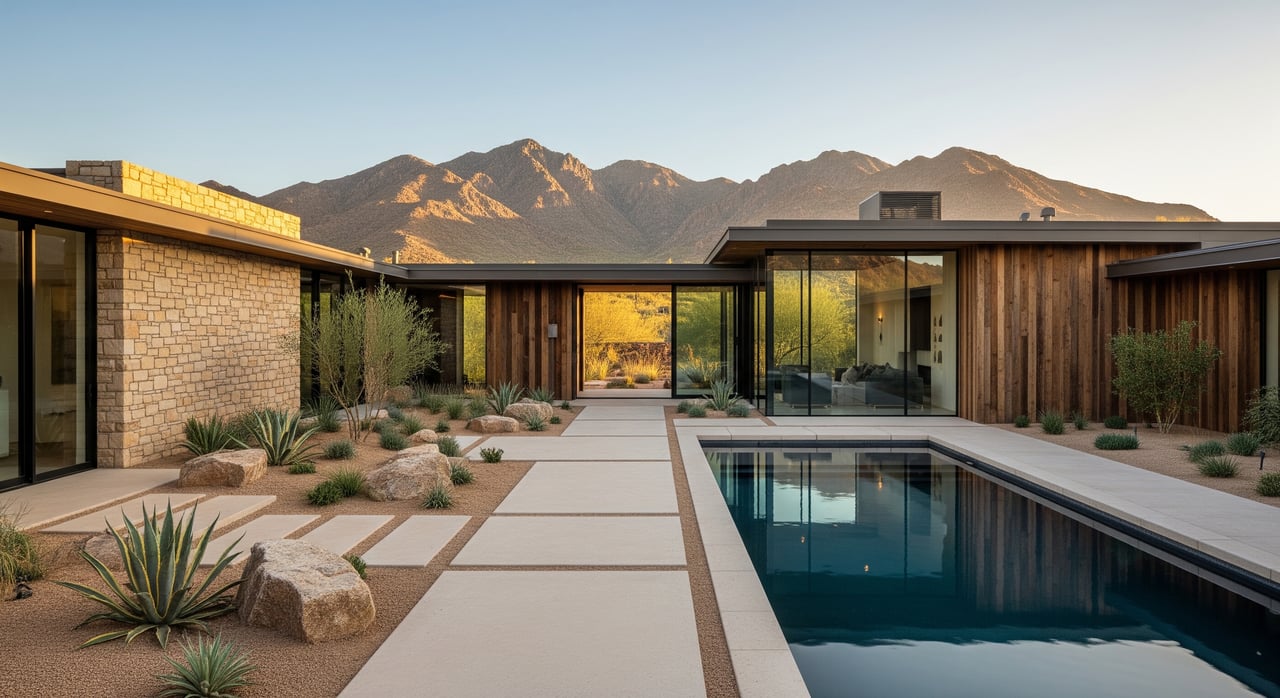
Thinking about a major overhaul of your Scottsdale home and wondering if a full rebuild would be smarter? You are not alone. Many luxury owners reach this fork in the road when a home’s layout feels dated, systems age out, or the lot could support something extraordinary. In this guide, you will learn a clear framework to compare renovation and rebuild paths, how local rules shape feasibility, what the true costs and timelines look like, and how to quantify resale outcomes. Let’s dive in.
Renovate or rebuild: quick framework
The best decision starts with structure, zoning, and money. You want to know if your existing shell can deliver what today’s luxury buyer expects, whether your lot and rules allow the home you want, and how the math pencils against realistic resale. Then you balance risk and timing.
What to assess first
- Structural condition and layout. Can the current footprint support ceiling heights, openness, and indoor-outdoor flow you want without heavy structural work?
- Lot constraints. Confirm size, orientation, topography, easements, drainage, and setbacks that shape what is buildable.
- Zoning and HOA rules. Identify any overlays, PADs, or design standards that limit height, massing, materials, or second stories.
- Financials. Compare a full-gut renovation to a new build, including demo, utilities, landscaping, and soft costs.
- Time and market exposure. Model how long each path will take and your carrying and transition costs.
- Non-financial value. Consider heritage, architecture, or personal attachment that could favor renovation.
Simple scoring model
Score each category from 1 to 5, where 1 favors renovation and 5 favors rebuild:
- Structural feasibility
- Zoning and HOA pathway
- Budget ratio (renovation cost divided by rebuild cost)
- Expected resale upside
- Timing tolerance
- Heritage value
Sum the scores. Higher totals favor a rebuild. Use this as a decision aid alongside detailed financial modeling.
Scottsdale rules to check early
In Scottsdale, feasibility often turns on approvals. City standards, overlays, and HOA design review can shape both design and schedule.
Public regulations that matter
- Zoning district controls. Setbacks, lot coverage, maximum height, and building envelopes determine whether larger footprints or second stories are possible without a variance.
- Planned Area Development (PAD) overlays. Many master-planned and gated areas use PADs that modify base zoning and add design expectations.
- Character and specific area plans. Locations such as Old Town and the Camelback Corridor include massing and materials guidance.
- Historic or conservation overlays. Designated properties may face limits on teardowns or require preservation review.
- Hillside and ridgeline protections. Parcels near Camelback or other slopes can have stricter size, location, and geotechnical requirements.
Private controls in luxury enclaves
Homeowners’ Associations and CC&Rs can be decisive in places like DC Ranch, Silverleaf, Gainey Ranch, and McCormick Ranch. Many require:
- Architectural design review and pre-application meetings
- Approved materials, color palettes, rooflines, and landscape plans
- Specific contractor licensing and insurance
Timing implications
- Pre-application and design review meetings help test massing and materials before you spend heavily on plans.
- Some neighborhoods require public notice or meetings for large projects, adding weeks.
- Variances or use permits can add months and uncertainty. Drainage and utility improvements can materially increase cost.
Fast-start checklist
- Confirm your City of Scottsdale zoning designation and recent zoning map.
- Pull building permit history and recorded plat or site plan.
- Review CC&Rs and contact the HOA Architectural Review early.
- Order FEMA floodplain and county flood-control documents.
- For hillside lots, confirm hillside and ridgeline standards and any required geotechnical reports.
Cost and resale math you can trust
A high-end decision deserves disciplined numbers. You want to model total costs, likely resale value, and net proceeds under multiple scenarios.
Key concepts
- After-Repair Value (ARV). Your realistic resale value after completion, derived from comparable sales.
- Total project cost. Design fees, permits, demo and site work, construction, landscaping and pool, interior systems, and a contingency of 10 to 20 percent.
- Carrying costs. Interest on construction draws, property taxes, insurance, utilities, maintenance, security, and temporary housing.
- Selling costs. Commission, closing costs, staging, and holding time to sell.
- ROI. Project net gain divided by total project cost.
How to estimate ARV locally
- Identify 3 to 6 recent closed comps within the same micro-neighborhood over the last 6 to 12 months. Match lot size and view orientation.
- Adjust price per finished square foot for mountain views, golf frontage, outdoor living, finish level, and square footage.
- For new builds, focus on recently completed luxury spec homes or custom builds rather than broad averages.
- Validate with a top luxury agent and a local appraiser to keep assumptions conservative.
Hypothetical rebuild example
The following is hypothetical and for illustration only:
- ARV after new build: 6,500,000 dollars
- Total project cost (demo, construction, soft costs): 3,200,000 dollars
- Carrying and temporary housing: 150,000 dollars
- Selling costs at resale: 420,000 dollars
Estimated net proceeds: 6,500,000 minus 420,000 equals 6,080,000 dollars.
Project net gain: 6,080,000 minus 3,200,000 minus 150,000 equals 2,730,000 dollars.
ROI: 2,730,000 divided by 3,350,000 is about 81 percent.
Run sensitivity tests. See what happens if ARV drops 10 percent or costs rise 10 to 20 percent. This reveals your downside band and whether the plan still works.
Cost drivers to expect
- Site work for pools, terraces, retaining walls, and desert landscaping
- Engineered HVAC and high-performance glazing for desert heat
- Custom finishes, millwork, and sophisticated pool systems
- Utility upgrades including panel capacity, irrigation, gas, and possible sewer fees
- Permitting, impact fees, and HOA-required landscape or wall treatments
Timing and financing reality
Time has a cost. Build your schedule first, then align financing and housing plans around it.
Typical timelines
- Major renovation with mechanical upgrades: approximately 6 to 12 months
- Teardown and custom new build: approximately 12 to 30 months from pre-design to occupancy
- Design and approvals alone: approximately 2 to 6 months, longer if variances or appeals are needed
Financing options to explore
- Renovation loans. Sometimes available, but many luxury owners use cash or bridge loans.
- Construction-to-permanent loans. Interest only during construction, converts to a long-term mortgage at completion.
- Jumbo and portfolio lenders. Terms vary for high values and loan-to-cost ratios.
- Cash-out refinance or HELOC. Useful when liquidity is available.
- Tax treatment. Interest may be deductible in certain circumstances. Consult tax counsel.
Carrying and transition costs
- Temporary housing or extended-stay options
- Interest on construction draws and interest reserves
- Insurance changes such as builder’s risk and liability
- Security and maintenance for a vacant or partially vacant site
- Property tax reassessment risk on significant improvements
Practical finance checklist
- Get pre-approval for construction-to-perm and confirm loan-to-cost and interest reserve details.
- Confirm builder warranty, change-order process, and payment schedule.
- Budget a 10 to 20 percent contingency based on complexity.
- Decide whether you can live on-site during phases or will relocate.
Risk controls and your team
A disciplined team reduces surprises and protects outcomes.
Key risks and how to mitigate them
- Hidden structural or soil issues. Order structural and geotechnical reports before finalizing scope and budget.
- Permit and approval delays. Meet with Scottsdale planners and HOA design review early. Use pre-application meetings.
- Neighborhood price ceilings. Obtain a luxury appraiser’s opinion to confirm ARV range.
- Cost overruns and schedule slip. Favor fixed-price elements where practical, use clear allowances, and hold contingency funds.
- Environmental and hazards. Check for termites, asbestos or lead in older homes, and underground utilities or easements.
- Market timing. Compare selling as-is at lot value versus holding to capture new-build premium.
The core professional team
- Architect experienced in Scottsdale luxury and design review
- Local custom builder with verified luxury references and an Arizona Registrar of Contractors license
- Structural and geotechnical engineers for hillside or unusual soils
- Licensed luxury appraiser for comps and ARV support
- Top local luxury real estate agent for comps and buyer profiles
- Attorney for contracts, CC&R review, and any appeals
- Lender experienced with jumbo construction loans
- Landscape architect skilled in desert-appropriate, water-efficient design
Due diligence checklist
- Structural, roof, and MEP inspections, plus geotechnical report
- Zoning, overlays, PAD, height, setback, and lot coverage confirmation
- HOA CC&Rs and Design Review process and timeline
- Utility capacity and any offsite improvements required
- Verified comps and a conservative appraisal estimate for ARV
- Lender terms, interest reserves, and cost overrun treatment
- Permitting timeline and any public-notice requirements
- Environmental checks and floodplain determination
When renovation makes sense
Renovation often wins when the existing envelope aligns with luxury expectations. If your floorplate supports open living, ceiling heights are workable, and the lot already captures light, views, and flow, a gut renovation with targeted structural tweaks can be efficient. A practical rule of thumb is to compare renovation cost to replacement cost. If renovation cost is well below roughly 60 to 70 percent of replacement, renovation can be the value path, especially if neighborhood comps cap ARV.
When a rebuild is the better path
Choose a rebuild when heavy reconfiguration is necessary to achieve ceiling heights, layout, and indoor-outdoor living. If foundations, roof structure, and utilities all need replacement, costs approach new-build levels without the same design freedom. Rebuilds can also make sense on premier lots where view orientation and outdoor living potential justify a higher ARV, and where zoning, PADs, and HOAs allow the program you want. Always test ARV against neighborhood ceilings to avoid overbuilding.
Make a confident decision
Your choice should be grounded in verified rules, a realistic schedule, and conservative resale math. Start with feasibility studies and approvals, then model costs, timing, and net proceeds under conservative, base, and optimistic scenarios. If you want disciplined guidance tailored to your parcel and goals, connect with a fiduciary-minded advisor who combines legal literacy, financial fluency, and deep local expertise.
If you are weighing renovation versus a rebuild and want a discreet, data-driven opinion of value and marketability, reach out to Brad Qualley for a confidential consultation.
FAQs
What should I check first when deciding to renovate or rebuild in Scottsdale?
- Start with a structural and condition report, confirm zoning and HOA rules, and obtain rough budgets for a gut renovation versus a new build before running resale math.
How do Scottsdale HOAs affect a luxury rebuild or renovation?
- Many luxury communities require architectural review, specific materials, and landscape standards, and may add meetings or conditions that extend timelines and influence design.
How can I estimate the resale value after a Scottsdale renovation or rebuild?
- Identify 3 to 6 recent nearby luxury comps, adjust for views, outdoor living, finishes, and size, and validate with a local luxury agent and a licensed appraiser.
What timelines should I expect for a Scottsdale luxury renovation versus a rebuild?
- Major renovations often take 6 to 12 months, while teardowns and custom builds often run 12 to 30 months, with 2 to 6 months for design and approvals.
What costs are often missed when modeling a luxury project in Scottsdale?
- Carrying costs like interest, taxes, insurance, security, utilities, and temporary housing, plus site work, utility upgrades, impact fees, and HOA-required landscaping.
When does renovation usually beat rebuilding for Scottsdale luxury homes?
- Renovation is often best when the existing envelope suits modern expectations and the cost is well below roughly 60 to 70 percent of replacement, considering neighborhood price ceilings.